
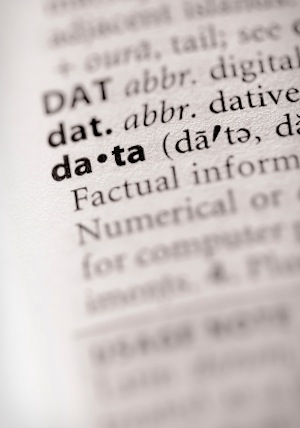
The Definition is a Moving Target
In order to make it possible to follow the discussion as it evolves, we have started a list of definitions as we read them across the internet. The common thread across all definitions is that Big Data refers to datasets so large and complex that traditional data-processing tools are inadequate to deal with them.
Expert Definitions
- Andrew Brust (ZDNet): Big Data is data that exceeds the processing capacity of conventional database systems — the data is too big, it moves too fast, or it doesn't fit the structures of your database architectures.
- Bill Franks (FCW): Big data refers to data that is too large, too unstructured, or arriving too quickly for existing IT systems to handle.
- PC Mag Encyclopedia: An enormous amount of data that cannot be processed with traditional database methods. Big data typically flows continuously from many sources simultaneously.
- Mike Gualtieri (Forrester): Big data is the frontier of a firm's ability to store, process, and access all the data it needs to operate effectively, make decisions, reduce risks, and serve customers.
- Margaret Rouse (TechTarget): Big data is a term applied to data sets whose size or type is beyond the ability of traditional relational databases to capture, manage, and process the data with low-latency.
The Three Vs
- Volume: The amount of data. Organisations collect data from various sources and the volume is enormous.
- Velocity: The speed at which data is generated and processed. Near real-time data gives much higher value.
- Variety: The range of data types and sources. Big Data includes structured, unstructured, and semi-structured data.
Conclusion
Regardless of which definition you prefer, the key takeaway is the same: data is growing exponentially, and the companies that can harness it effectively will have a decisive competitive advantage. Opentracker is built to help you make sense of your data in real time.